


THE LAST CRITIC: FILM REVIEW

THE LAST CRITIC
Directed by Matt Wishnow. Screening as part of First Films festival.
DON’T LIVE WITH A music critic, I strongly advise you. Just don’t.
Yes you may be tempted by their general handsomeness, equanimity and large pools of ready cash, I grant you. You may always need an opinion on something you didn’t know, didn’t want to know, will never think of again, expressed in full and surprisingly endless sentences that may well exceed the length of time it takes to play or watch something, it is true.
You may think to yourself I would be thrilled to have in my house another version of this reissued/remastered/remaindered obscurity in a home already packed to the gills and beyond by this, that and the other piece of physical musical product, understandably. You may wonder what it would be like to wake up every morning, go to sleep every night, move about the house or in the car or any other waking moment accompanied by the sound of someone/something/godknowswhat being played whether you asked for it – indeed, whether you specifically asked not to have it – which is fair enough.
I can see how tempting it all is. But, and I cannot stress this enough, do not live with one.
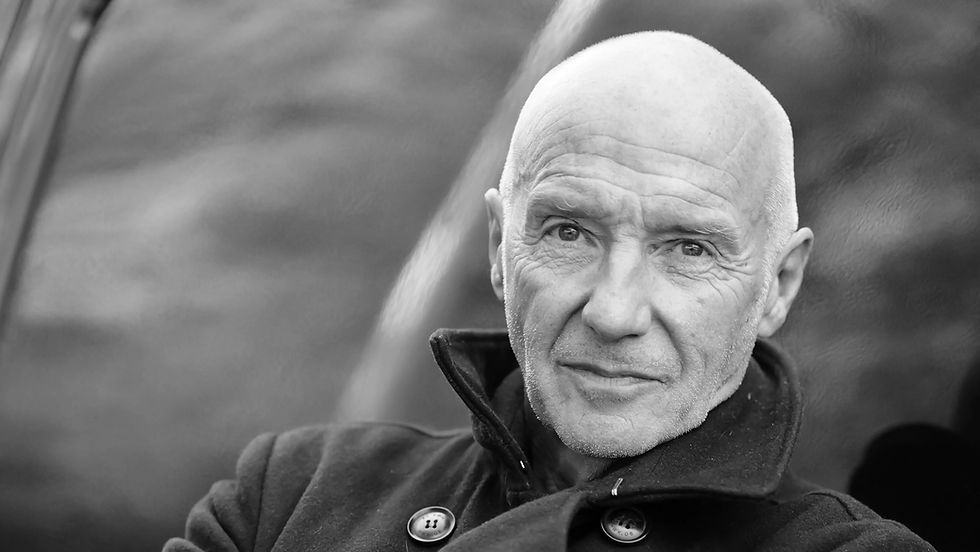
Which brings me to The Last Critic and Robert Christgau, the subject of Matt Wishnow’s unexpectedly engaging film, the self-styled (perhaps jokingly at first but these things stick) dean of American music criticism who in his ninth decade of life and seventh decade of writing is still offering his thoughts on most things musical. Except maybe prog, though if pushed he’ll tell you why it is an abomination.
(That title? Let us let pass for now the typically American hyperbole/blinkered perspective that declares anything of theirs the best or first or last or only part worth recognising. Let us also recognise that most Australian music fans would know him more by reference – in advertising, in a Sonic Youth song advocating his termination – than by use of his Consumer Guides in books, let alone his regular writings in the Voice. And finally let’s accept that a music writer writing about a music writer is already halfway there to being on-board with a film that must fill the space left by not watching Almost Famous today.)
In his small New York apartment, shared with his longtime partner in music and life, the writer Carola Dibbell – whose intellect, drive and musical interests, not to mention her absolutely central role in his career and his thinking, gets respectable attention – the shelves are overflowing, the space non-existent, the clutter immeasurable, the external light narrowed, the writing conditions horrendous for any OH&S expert. And there’s even less room to move in his offsite lock-up. The man seemingly has never got rid of anything, including mounds of reader correspondence, in his 70s years of public work. Except maybe the odd prog record.

Is this why he is such a font of knowledge, or at least opinions, or is this just a sign of an obsessive who may not be much use in a lot of other areas of life? Was he born for this or did it shape him into it? Or both? This fundamental question isn’t answered in this film, though you can perhaps see how a career in journalism became music-fixated by circumstance as well as interest, and indeed timing. Once that happened obsession took root, which is not that different from how regular folk get sucked into fandom if you think about it. The difference being, as we hear in the film in a spin on the usual put down, opinions are like arseholes, everyone’s got one, but not on so many topics!
For decades the voice of the Village Voice, now on his own, principally online and crowd-funded, Christgau’s career rose at much the same time as the likes of Rolling Stone and Creem and peaked in the fertile and sometimes feral decades of vinyl peak and CD avalanche when, in the USA and the UK at least, cultural commentators carried some heft in music. Even if, or maybe especially because, his forte was the brutally short/brutally effective capsule review. Even if, or maybe especially because, his interests and passions were wider than many or most of his readers.
Now that career has gone beyond the lifetime of most newspapers and magazines’ dedicated coverage of music, that forlorn world where the idea of having someone on staff who takes this stuff as seriously as the people on staff writing about sport or business do, seems utterly mad to managers who barely read anyway. He may not be the last critic but it’s not a big pool. And yes, plenty of people say it doesn’t matter, though Wishnow doesn’t appear to be one of them.
As much a panegyric to the idea of a critical voice as it is to the man himself, The Last Critic fills the spaces around Christgau with the many critics who found themselves championed, schooled and energised by him, and a handful of musicians who survived being mauled by him – but nonetheless still read him – or who rode the wave of his fandom. With heads shaking sometimes in disbelief or admiration, favourite lines quoted freely, they are not half as convincing an argument for the worth of a critic as the sometimes irascible man himself who sees no reason to stop thinking about music while ever there is music to engage with.
He’s not asking you to agree with him; he is asking you to think about it. And asking you to explain yourself, even if only to yourself. Which is a lively way to be in life, though not necessarily a great advertisement for someone to live with. But you’ve been warned about that already.
READ MORE
SEE MORE
The Last Critic screens at Golden Age Cinema, Sydney, on October 30, as part of First Films, which runs from October 27 to November 1.


Comments