


IT MEANS SOMETHING TO HIM … OH MIDGE URE
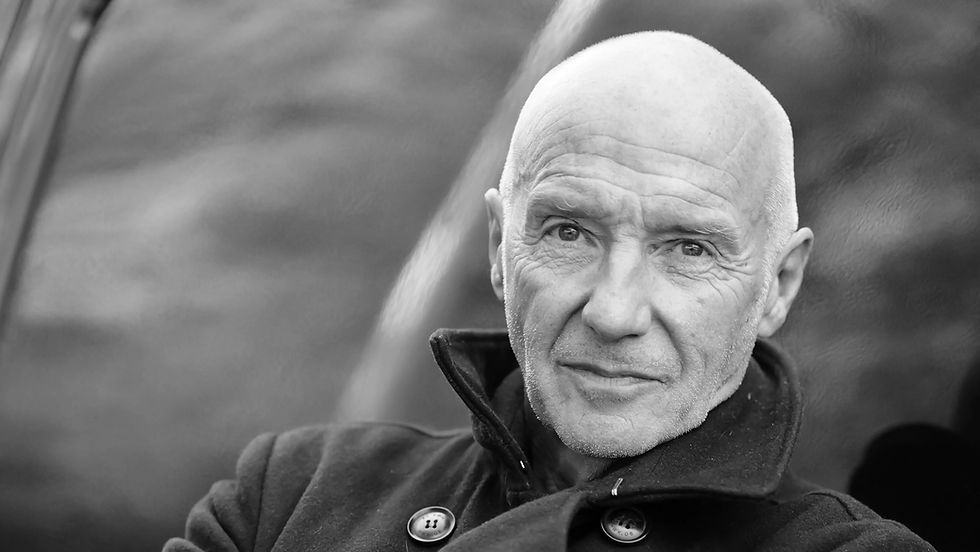
A SLIGHT MAN, even more lean of hair, and seemingly built for low impact speed and melting into the background, like his softened Scottish accent, Midge Ure is even quicker to smile or deflect.
As I remind him, the last time we spoke it was in connection with a documentary about the Blitz Club and the New Romantic/synth pop scene that grew around it and although he had been a prominent figure – taking over Ultravox and bringing them to commercial peaks around the world; co-writing the hit Fade To Grey for the unlikely pop stars Visage (and later, for better or worse, being partly responsible for writing Do They Know It’s Christmas Time, the mega-hit charity single and orchestrating the resulting Band Aid concerts – he claimed to have been a secondary figure in it all, not worth too much time being questioned or lauded.
“The kids that instigated that whole new wave/new romantic thing were part of the punk scene and they got disenchanted with it, so the new thing was the antithesis of what punk was,” Ure says. “And that was glam.”
Which is pretty typical. But sir, on the eve of an Australian tour where so many strands of this career will be pulled together, isn’t about time you claimed your place as a pioneer of ‘80s electronic pop (oh Vienna indeed), a great survivor of punk (which saw him go from tenements thruster to frontman of Glen Matlock’s post-Sex Pistols outfit Rich Kids) and trans-Celtic rock (with a stint in Thin Lizzy in the resume), a founder of one of the rare celebrity/artist charity efforts that had wide impact … in short, the real king of Scotland?
“My rightful throne?” Ure chuckles. “You know what, I’m one of these guys, and I don’t do this for effect, if I’m in a room full of other musicians I feel like the youngest one there. I feel like the one that shouldn’t be there, and I still wait on the hand on the shoulder to say ‘where’s your pass?, you shouldn’t be in this room’.”
Good god man, why?
“Because I’m still a fan and I mean that absolutely genuinely. I think all musicians are fans of someone else, that’s what got them into it in the first place, so I find myself slightly intimidated still,” he says. “Maybe that’s why I play things down.”
Ok, sure, when he walked into a room with David Bowie – as he did on numerous occasions, including at the Blitz Club – that might have been understandable, but he must recognise that there are two generations, or more, now of people who see him in a similar way to how he saw, say, the members of Roxy Music: as people who did the thing that inspired them to do their thing, who showed it was possible to be a kid from Newcastle or Birmingham or Glasgow and come through three or four iterations of music. He must know he is that person to many.
“I … I … do, but it doesn’t make it any more comfortable,” he concedes. “I only know it because they tell me. Various times over the last 40 years people have come up to me, who had been doing incredibly well – a lot of the dance guys said I saw you on Top Of The Pops and you were behind a synthesiser and it made me want to get my synthesiser and a drum machine. And they were the ones who thought hold on a second, instead of three chords what if it’s one finger on three notes on a keyboard. That was just as radical and revolutionary and punkish as what had come before.”
Oh we can be heroes, for more than one day.

“But isn’t that how it should work? It is what we do: you’re on your perch for a little while and you pass it on to someone else. It’s just that these days the perches don’t break; you can stay on it for as long as you like. Simply because rock music, pop music, whatever you want to call it, has grown up,” says the Bowie fan. “Back in the ‘80s this was a job for five years, this wasn’t a job for life. You might want a job for life doing it, but it didn’t exist. It did in every other genre of music, folk and blues and classical, you could survive, you could be there, you could get better at what you did.”
His theory is the internet and greater comfort with/far less disdain for commercialism has extended the life of many an ageing musician as so much music is consumed as timeless, in the sense no one is paying attention to when it was released, just that it’s accessible on a commercial or film/tv series soundtrack and is presumed to be “now”, helped by the fact sonic patterns are interchangeable across the decades.
It’s not just the sound, it’s the styles and structures recycled of course. But then, when the Blitz scene was happening there were complaints then that those artists were merely repeating Bowie or Roxy or Kraftwerk, and amusingly Ure points out that the most streamed of his songs online is his cover of Bowie’s The Man Who Sold The World and that’s because it’s been used on the soundtrack to an online game.
“All these youngsters have discovered it, but to them it’s timeless. They don’t know when it was recorded, they don’t care if they like you.”
But I have a counter theory that the longevity of a career in rock and pop might have been influenced in small way by Ure himself, in his role organising Live Aid. Not for nothing were some of the biggest commercial success stories from that multi-artist, trans-world event older acts who might have been thought past it. Think of Queen for the best but not only example.
After putting on the kind of shows only experienced, nerveless (relative) veterans got new leases of life, extended careers and an industry-wide/audience-wide view that it was ok to keep going, and it was ok to be 18 and listening to someone 38 or 40 or, goodness, 50 or 60.
“I think you’re right. That divide was gone. There’s a great book, I Hope I Get Old Before I Die [by British writer and journalist David Hepworth] and the opening chapter talks about Live Aid and says the ‘old’: bands like The Who, Elton John, Queen, at Live Aid were in their late 30s,” the 72-year-old says, then adds with droll amusement. “The old bands.”
That said, you won’t find Ure bemoaning the absence of good music, the death of rock’n’roll or any of the other shibboleths of the grumpy old bastard music fan or musician. He’s still searching, and finding, new things to enjoy. Interestingly he puts that down to an earlier generation of grumpy bastards, the ones with the typewriters (no, you’re welcome Midge).
“I think there’s an element of being damaged in your youth by what was then the media, the music media,” he says. “Ultravox were a great target for the NME and all the music papers, and they’d slate you and in the back of your head, even though you’d try and ignore it, you’re trying to appease them. I don’t know why. You would constantly think, well what will they think of this? Will they like this? Not that you’d adapt anything to do it, but it’s always there, the little nagging doubt.
“So it’s that thing about trying to stay one step ahead of the curve, reading the room, seeing what’s going on, what’s influencing you. There’s an element of ‘am I looking at what I’ve done in the past and re-doing it? Am I treading the same old ground?’.”
He can trace parts of this attitude to the moment of his greatest commercial success.
“Part of [this resistance to repeating] came from after the Vienna album with Ultravox: every label manager that we met wanted Vienna Part 2, and we didn’t give it to them. We went off to Conny Plank’s studio [just outside Koln] with no songs, in the middle of Germany, and wrote and recorded an entire album in three months. Created it from scratch using the studio as a tool, and presented them with that. And that has been the attitude all the way through: am I standing still?
“It was a David Bowie quote wasn’t it, if you feel comfortable with what you’re doing, you’re not doing it right, you should be slightly uncomfortable. And maybe expecting the NME to cut your head off.”
If anything, there is a freedom and a perverse level of comfort in making music, old or young, in these fractured media times.
“These days I think there’s less anxiety when you put a new record out. You don’t expect it to chart, you don’t expect to get good reviews ‘cause you’ve had a lifetime of bad ones, and it doesn’t matter. I don’t think you care about it nearly as much as you used to because you realise that irrespective of what anyone said or has written about you, good or bad, it made no difference. No difference at all.
“Because what you have done is your music has landed on the right ears, it’s touched the right hearts, it’s told someone the story of their lives. That’s what it’s done and you have to be satisfied with that.”
Satisfied, sure, just not boasting about it if you’re Midge Ure.
READ MORE
SEE MORE
Midge Ure plays.
Astor Theatre, Perth, October 8
The Gov, Adelaide, October 10
The Tivoli, Brisbane, October 11
Odeon Theatre, Hobart, October 13
Enmore Theatre, Sydney, October 15
Palais Theatre, Melbourne, October 16


Comments