


WHERE ARE THE PROTEST SONGS? THEY’VE ALWAYS BEEN HERE SAYS WIND BACK WEDNESDAY
Updated: Feb 4
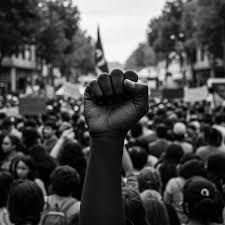
Like the idiots who declare there’s been no good music released since whenever it was that they were 20 – essentially revealing they haven’t listened to music outside their collection/classic hits radio/prejudices – the tut-tutters and bemoaners, the “where are all the protest songs” crowd, have been out in force again in the past weeks.
Events in Minneapolis, Palestine, an Invasion Day march in Perth and the death of Midnight Oil’s Rob Hirst have inspired them to wonder and ponder that question. Though not with any sense of curiosity to find examples, more to declare a happy ignorance because, well, they hadn’t heard any.
Like, yeah but, who are Kneecap anyway and Briggs isn’t really a senator, who you’re kidding. And Bob Vylan and Cash Savage aren’t real people, are they?
Along the way, these commentaries inspired responses from the likes of Nashville-based Australian singer/songwriter, Emma Swift, who’s had enough of the whine, declaring many of them are “dorks who have only ever engaged with corporate music and have just felt the twinge of outrage for the first time”.
Even when old hands at this resistance-in-song business Bruce Springsteen and Billy Bragg, released new songs last week to join the like of The Marsh Family and Jesse Welles (who alone could fill a couple of hours of brand new protest songs and who has the decency to sound like an old fashioned protest singer as a man with an acoustic guitar), the where-are-they crowd got up wanting more. Because they didn’t know the longstanding Allison Russell and Tom Morello, Kendrick Lamar and Margot Price, Barkaa and Frank Turner, Courtney Marie Andrews, Rhiannon Giddens and Brandi Carlile. To name but a few.
As Wind Back Wednesday recalls, this whine ain’t new. Neither is the derision from people who can’t believe we’re having to listen to it. This small sample with an Australian edge was in 2012.
Don’t worry, we’ll probably be back on this topic in ten years.
_______________________
WHERE ARE THE MODERN protest songs? Where are the musical activists rousing a generation to take action? Doesn’t anyone care anymore?
You’ve heard this lament. You may have indulged in it yourself, especially if you’re in your 40s, 50s or 60s and have in your head a golden period of protest music. Those would be the years which began with Dylan and Baez and civil rights, flowed through to moratorium marches and Springbok tour blockades and had their last blast in the anti-nukes, anti-Thatcher/Reagan, pro-land rights heyday of the 1980s.
Now, you say, it's all empty flash and sponsors cash by Gen X and Y singers more concerned about counting Facebook friends than counting votes. In my day .....
The problem with this obvious truth is you’d be wrong. Very wrong. Protest songs exist, they thrive, and they’re not just being sung by a longhair with an acoustic guitar in front of a sit-in. You’ll get them in hip hop and folk, dance music and reggae, and if you venture out of your house to any music festival, you’ll see it flowering.
Have a look at the crowds funk and soul band Blue King Brown attract to concerts chanting support for freedom for West Papua, education of young girls in Sierra Leone or backing the ideals of the Occupy movement. Listen to the songs written by John Butler or Xavier Rudd addressing gas plants in the Kimberleys and strip mining or the words of Kutcha Edwards and Yung Warriors addressing indigenous rights and redress. Peer into the underclass and the forgotten in the songs of Sydney rapper Urthboy and hear that song which summed up one part of the ‘80s protests, Solid Rock, being applied to the opposition to coal seam gas mining.
"I think a lot of people of the older generation they think of protest songs, they think Vietnam and it ended there. But it didn't,” says Natalie Pa’apa’a, one of the charismatic duo, with Carlo Santone, at the heart of Blue King Brown. “People are still singing out for peace and against war but also for other issues that are facing them locally and globally.
“That's what we do, we try and use music as a way to inspire people to remember that they are part of a global community."
Sure, you may not be hearing these songs on the radio or reading about them in your daily newspaper but maybe that says more about the media than the message says Santone.
“The Occupy movement was purposefully not given airtime for a long time until it was too big to ignore,” he says. “When you get past the safe issues of peace, love and anti-war – which are very important –there are people targeting touchy issues, for example West Papua.”
Or refugees and asylum seekers, a topic which featured in one of the biggest hits of recent years, My People, an electronic dance song by Sydney duo the Presets which asked that you think while you move and sing along to “I’m here with all of my people/locked up with all of my people/so let me hear you scream if you’re with me”.
“We felt it was important to write a song that would hopefully show our overseas fans that not all Australians necessarily shared the same views as the people running our country,” Presets vocalist Julian Hamilton says. “We have our own issues to kick and scream about, but we do it in our own way.”
And that way may mean obscuring the fact that protests are happening alongside the beats. “We write songs about our disaffection for the government; songs about gay rights; songs about the media's demonisation of youth - but I don't think anyone thinks of The Presets as a protest band,” says Hamilton. “We're a ‘party band’.”
If you’re still sceptical about youth culture’s connection to issues, just ask one of those who was at the forefront of the 1980s wave of protest. Shane Howard, who wrote Solid Rock for his band Goanna 30 years ago, is lauded by Pa’apa’a and Santone for his continued involvement in local and international issues and he is equally effusive in his admiration.
“It may be hard to hear these voices in a world of vested interests but they are still out there,” insists Howard. “Blue King Brown and Airi Ingram are fighting to shine a light on the West Papuans struggle for recognition and independence; my own song, Kimberley Rain, and John Butler's song, Kimberley, give voice to the struggle against the gas plant north of Broome; Bliss and Esso's song, Addicted, the work of Hilltop Hoods and others remind us that the resistance goes on.”
Some of the shared passion can be heard in almost identical expressions of optimism about the nature of protest songs in the face of ignorance or indifference.
Natalie Pa’apa’a says that art is one of the most effective ways to convey a message as “a song has a different power about it than a petition". To which Shane Howard adds that the alternative stories of this country are always being written because “a song is still the most potent and transmissible form of human emotion and memory”.
READ MORE


Comments