


NICOLE ATKINS ALIVE AGAIN ON LESS SLEEP, MORE DRAMA, NEW SONGS
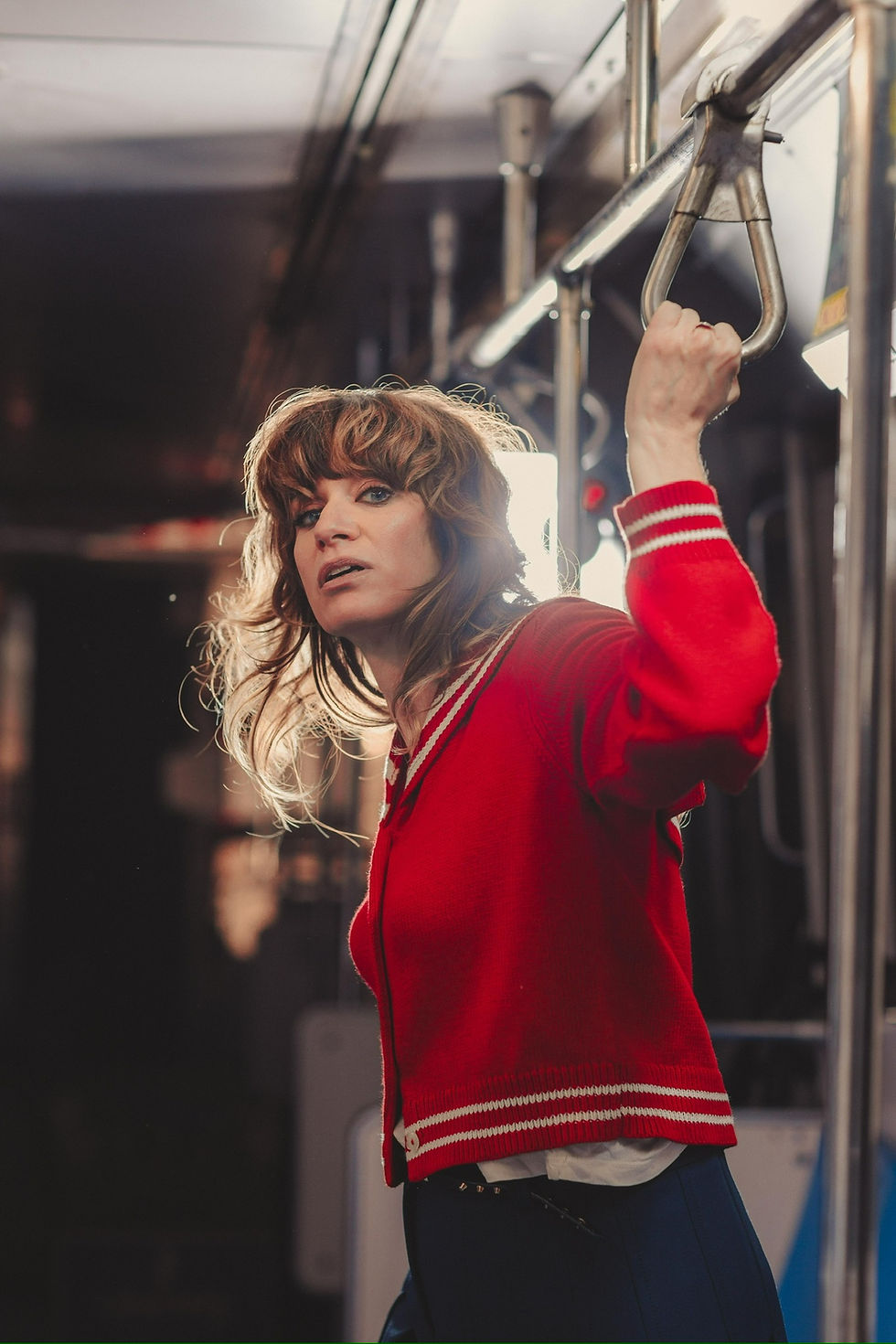
IN HER NASHVILLE HOUSE, displaced New Jersey-ite Nicole Atkins is sharing with some regular irregular visitors, three cats – identified as the witches of Eastwick, though one of them at least is male – who share their love around the neighbourhood but choose to spend their evenings with Atkins and her Scottish tour manager husband, Ryan McHugh. And the felines are very welcome now.
“Little Brave [the Sarandon-manque of the Witches] is the OG,” Atkins says warmly. “I had a June bug flying to my face and he just leapt in the air and caught it with his teeth. Saved my life. I love them, they’re like the Guardians.”
He’s not the only one in her corner, with Wilco’s Pat Sansone up there in favoured nation status too after his full commitment to producing her new album, Drama. While the basic tracks were done in four days, on a super tight budget for her seventh longplayer, Sansone and his basement studio were seemingly at the singer’s disposal for as long as needed.
“Pat paid for the mastering because we ran out of budget: he paid for it,” an admiring as much as thankful Atkins says. “He can play everything and he’s not like a dick about things. What a guy. I hope this record’s a hit so I can pay him back.”
(What’s Drama sound like? Like the full-tilt commitment of early ‘60s pop meets the synths moves of the late ‘70s and ‘80s, with a touch of what made her label, Sun Records of Memphis, Tennessee, famous, and, summing up those Jersey foundations, “Italian grief, religious relics wrapped in plastic in old Italian ladies’ houses, crumbling 1920 facades on the beach, and also a good dose of David Lynch and Danny Elfmann and old Disney”.)
Sansone sounds like the kind of guy who would jump in front of her to save her from the June bug.
“He is, he is like Little Brave,” she chuckles. “Even now he’s coming over and being like how’s it going, what do we do, what do you need, how do you feel? When I’m sick he Ubers me soup. Like, what a dude. He took out my trashcans when I was sick. I feel like he’s going to be the only guy that produces my records from now on. He ticks all the boxes and I don’t know that I’ll ever find that again.”
While we’re completing the set of helpful males, there’s a label boss and sometime co-writer with Atkins who appears on the album, the Roy Orbison of the millennium, Chris Isaak. You may have come across him; Atkins has known him since the early aughts as a tour mate, and seemingly everyone loves him. But there’s a quirk here to explore.
Having seen Isaak up close and in action off-stage, I do know that one of his most effective techniques, especially if there is a tricky or potentially problematic moment in an interview, is pulling out his guitar and, seated a metre away from his interrogator, breaking into song sung to you: eyes never leaving you face, that voice mellifluous. Male or female, you are discombobulated as much as charmed, and whatever angle you had set yourself for goes out the window. Is that how he conducted the contract talks?
“I wish,” Atkins smiles. “No. But actually though that’s how he got me to write with him.”
This was more than a decade ago when she was working for Sirius FM as a weekend host and was asked to tap into their casual acquaintance and interview him. Isaak was there to promote a Christmas album but in the middle of the interview “he just picks up the guitar and starts singing something and nods at me, and I’m harmonising with him”. They sing so well together Isaak invites her to San Francisco to write with him. “And I was like, it’s on! And now [she laughs] I’m like the best friend you can’t get rid of.”
(It’s worth pointing out here that Isaak at no point in our interview asked me to harmonise with him. Or write with him. Or come to San Francisco with him. Sigh. But then I couldn’t, as Atkins did a few weeks ago, ask him to sing with me on my debut at the Grand Ol’ Opry. Sigh.)
Working with him up close “is like showbiz school”, Atkins says, despite it being 20 years into her career when you might think little tweaks to technique might be all that’s left to gain. “It’s the only thing that keeps me alive,” she counters. “I hope to be like this when I’m older but I can’t imagine ever being any different. I get so excited about new stuff or new people. I don’t know if it’s my ADD or what, but it’s like novelty. Something new to get excited about.
“Chris brings me showbiz tricks but I think what I bring to our friendship is I remind him what it’s like to be an artist. He even says that. He says I love going to your house, it’s all crazy looking but this is the home of people who make things, and it reminds him of how he started. I don’t want that to go away.”
Those six previous albums, a whole lot of record company shenanigans and many hundreds of gigs tell you Atkins is no novice, and you can see that in how she uses her voice, not least knowing when not to unleash its full power without losing any of the drama in Drama. She credits another collaborator friend for setting her on that path, post-punk veteran and Nick Cave and The Bad Seeds drummer/percussionist, Jim Sclavunos.
“The first time we got together to write he was like, ‘I have some opinions on your voice’, and I was like, huh?,” she remembers of the arranged pairing with Sclavunos. “He said ‘I think you use it too much. What you can do with it is incredible, but when you do it too much it loses its incredibleness, and it should be more like a secret weapon.’ In my head I was like, fuck this guy! Seriously, fuck you! And then we wrote three songs that day … He really taught me to think about how your voice is more tones and shades, like you do with a box of coloured pencils.
"There’s a value system in colour and if you’re going to deliver a song like a story, in the way Barbra Streisand would, you can’t be like crescendo crescendo crescendo! And I never even thought about that before.”
With a rueful look Atkins adds: “Sometimes it’s like the insults, if you can get your ego out of them, maybe you can take something good away from it.”
After these tales there’s a line on the album that’s reverberating in my head, “you’ve got to remember to be your own friend”, and I reckon one way to be your own friend is to find the right kind of friends to have alongside you (“yeah, definitely,” she pipes up), and if you can, find the right doctor. Something which Atkins has had less luck with, contributing to a seriously debilitating long-term issue with sleep that makes sense of something she said earlier this year, that when writing these new songs: “I was trying to create a sound that would save my life”.
For far longer than seems reasonable Atkins was suffering bouts of extreme sleeping that might see her sleep for days at a time, an affliction that went from a few times a year to a couple of times a week by the end of last year – “everyone thought I was just on drugs” – despite seeing multiple medical types.
“My last straw was the anti-depressant I started taking when I quit drinking, the last thing I hadn’t deleted from my life to see what it would feel like. And that did it,” says Atkins. “Even now, it’s been almost a year, and I’m still counting days, like an alcoholic, of ‘I woke up this morning’. Since January 3rd I’ve woken up every morning.”
Getting out of that sinkhole is impressive enough; writing herself out of it with some of the best songs of Atkins’ career is something extra.
“I didn’t even notice that I was even writing,” she says of those crushing times. “I would be writing at four in the morning, three in the morning, and then the next day, if I woke up that day, I would be panicking. I it was like I was writing almost subconsciously. It wasn’t until I was able to get off that medicine that I could stop floundering and life got exciting again.”
Exciting again? “Getting back not just that to that original sound [see earlier reference to Italian grief, David Lynch etc] but getting back to that excitement of ‘ooh, something that really sounds like me’.”
The result, in new songs such as When The Night Falls and Singing In The Mirror, which was “written in a five minute crying spell” as she literally looked at herself in the mirror at a low point, “was so vocally unencumbered it gave me the same feeling I had when I wrote songs for [her 2007 debut, named after her home town] Neptune City. I didn’t think feeling like that was possible again. I thought I was going to be like Grandpa Joe [in Charlie And The Chocolate Factory]”.
The appeal of a life spent in PJs with occasional chocolate aside, that had to do something to anyone’s brain, to their sense of self.
“I needed a sound that would save my life was like what we were talking about before, about getting older and being curious about new bands, new art, new books: I felt like that part of me was dead too,” Atkins says. “But this was like the kind of thing when you are excited to walk into a party and play your demo. I remember when I had the Neptune City demos, I’d walk into any bar in New York and be like ‘yo, put this shit on’ and they’d put it on and people would be like ‘who is this?’ and I’d be like, it’s me motherfucker!
“I never did that since, but I felt like that again with [Drama] and it made me feel alive again.”
READ MORE


Comments