


BLESSED ARE THE FIDDLERS MARTIN HAYES, FOR YE SHALL INHERIT THE EARTH
Updated: Nov 4, 2025
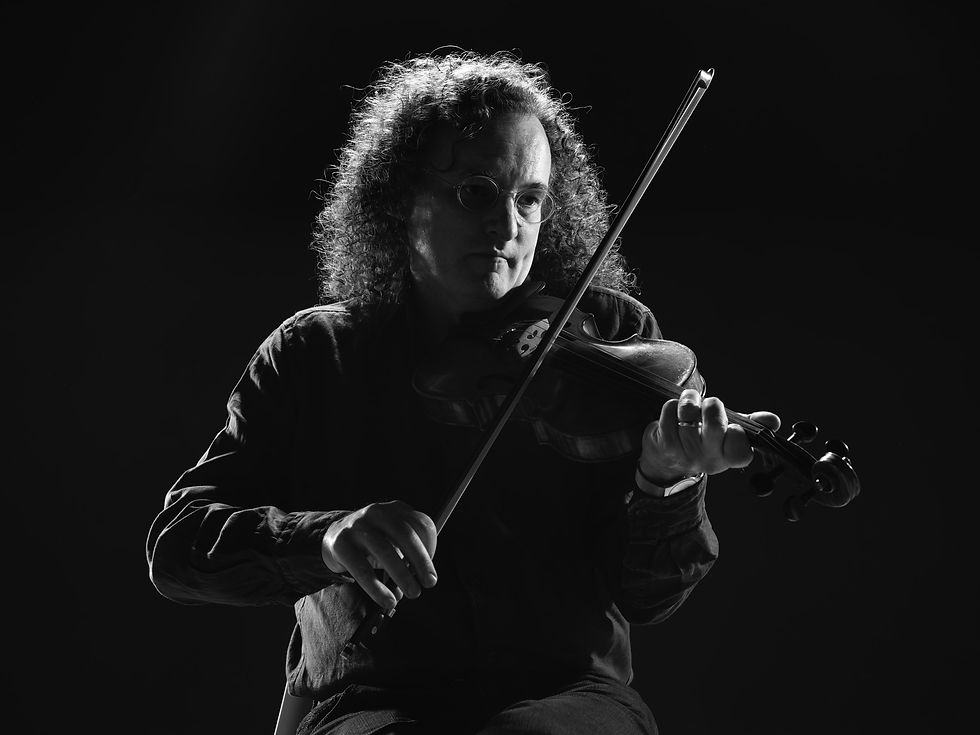
THIS MAY BE DOWN to remembering The Life Of Brian better than other reported versions of the sermon on the mount – fact check aisle three! – but there’s always been a soft spot in my heart not just for cheesemakers but the manufacturers of all dairy products. Yes, even more than for the meek, who admittedly have had a hell of a time.
So there’s reason to warmly greet the great Irish fiddler Martin Hayes who grew up on a dairy farm in Maghera, east County Clare through the 1960s and ‘70s, though that was only part of his story given that by his teens he was a regular music maker well beyond his town, often enough with his father, PJ Hayes, a note fiddler himself.
Hayes has talked about coming home late at Saturday night/very early Sunday morning from a gig somewhere and being sent off to milk the cows and then mass. It’s a story that echoes ones my mother told of leaving all-night dances in Mauritius and going straight to mass (and then, thank god!, breakfast).
As the Mauritians and Irish could tell you, dances and mass, indulgence and prayers, music and repentance, Saturday night and Sunday morning, were not two separate things. Hell no, it was just one rolling weekend event for the Catholics (not just the “good Catholics” as at that time there were two types of people: Catholics and the damned) because this was life.
“Going to mass in those years in Ireland, you couldn’t really have the discussion about whether that was optional or not,” Hayes says wryly. “Not even from a religious point of view, but ‘the Hayes weren’t at mass, what happened?’. In fact in Ireland there was a period where Irish nationalism, language, music, religion, agriculture, culture was all one thing. You couldn’t take the elements apart and have them individually.”
All these were aspects of the Irish identity and theoretically you couldn’t be Irish without understanding and respecting all of them. Which might make things a bit insular. Quite some decades on, has Hayes – a six-time winner of the All Ireland Fiddle Competition, holder of an honorary doctorate from the National University of Ireland, and artistic director of the Masters Of Tradition Festival – been able to separate the music he makes from that identity?
“Well, in a way, yes, and in another way, no,” he says. “It’s always traditional Irish music: it comes from there, it comes from those people, it comes from the lives of generations of people before me. However, I did leave Ireland in my early 20s and lived in America for like 26, 27 years almost. In that period I thought a lot about the culture and the music because sometimes you need a bit of distance to be able to think about that. It became quite important to me that the music could just stand on its own two feet, as music. That it didn’t need the support of ‘well if you’re not familiar with Irish culture this music won’t make sense and if you’re not from there you won’t be able to play it’.
“One of things I think about this music, traditional Irish music, is the first thing it is is music; the second thing it is is traditional; the third thing it is is Irish. So the first thing is music, and that has been an important distinction for me.”
Folk and blues are ostensibly music of the working class, farmers or labourers or those who have to earn a living, and music is for community and pleasure. and there are few more basic working class people than musicians who mostly will never make much money and probably envy dairy farmers. But one aspect of Hayes’ work is crossing formal and informal borders, playing cailies or concert halls, with pickup musicians or the classically trained, people who see the traditional methods as the real route and those who think formal training elevates.
Renowned for bringing as much emotion as technique to the music, he’s played in grand concert halls such as Muziekgebouw in Amsterdam and next year has booked in Carnegie Hall, he’s recorded with the cellist Yo-Yo Ma and the bassplayer Sting, shared stages with numerous orchestras, and will tour Australia in February with guitarist/composer, Kyle Sanna. Is there always respect across these lines?
“When I was younger I didn’t feel there was that respect,” says Hayes. “But I think over the years there has been a growing respect. I’ve done things with the National Symphony Orchestra in Ireland in recent times and when I meet the players they’ll say ‘oh my kid is learning the pipes’ or ‘I play a bit of bluegrass and some Irish music myself on the weekends’. 50 years ago that was not the case, absolutely not the case: there was a class structure in the worlds of music. I love that that is breaking down and I love that there is communication across the divides.”
Even if they’re not Irish!
“One of the things that has enriched Irish music over the years is actually that dialogue,” he bats back genially. “If you go back to the ‘20s and ‘30s in America, the early recorded traditional music there was a relationship in Ireland with the popular music of the day. You can hear a ragtime influence almost in the way Irish music was recorded and played. Then in the 60s and 70s the whole folk music revival – guitars, bouzouki’s, folksongs – gradually wove its way into traditional Irish music. And those were all radically different sounds from what had come before but now we accept them as the normal sounds of traditional Irish music. I like the idea that traditional music is a constantly evolving process and that it is continually in dialogue with other forms, and learning from that, and that other forms are learning something from us.”
That said, tonight, after this interview, our man has a concert of two: him and a concertina player “where we will just play tunes”. Which does raise one question: if one night he is playing with Yo-Yo Ma and the next night he plays with a traditional group, does he say that on the first night he was playing violin and the second night a fiddle?
“No, I’m pretty much always a fiddler,” says Hayes. “My management company are a big classical music agency and they have this long list of musicians: conductor, conductor, violinist, violinist, violinist, and right in the middle of all that there is one, Martin Hayes fiddle player.”
Why would he differentiate?
“To begin with I didn’t have any formal training so I didn’t come through any of the routes and normal violinist would do. Secondly, violinists are typically classical musicians and its associated with the genre, so if I say violinist the assumption is I play classical music straight off,” he says, before offering a wry smile as he explains that “the only time I use the word violinist or violin is when I’m getting on an aeroplane because if I say a fiddle, they will actually assume it’s not that valuable; if I say violin they won’t even touch it.”
In late-stage capitalism, a long way from the Mount of Beatitudes, that really is the final word.
READ MORE
SEE MORE
Martin Hayes and Kyle Sanna will play:
Perth Festival – February 18-19
Theatre Royal, Castlemaine, February 21 (2pm and 8pm)
Recital Centre, Melbourne – February 24
The Concourse, Chatswood – February 25
Powerhouse, Brisbane – February 26


Comments