


A GAELIC INFUSION, A HOME RECLAIMED … DAVID KEENAN REBORN

THE MAN HAS HAD A YEAR. A few years, for sure, what with Covid, an existential crisis, a physical one accompanying it – they took up a lot of space. But this one … well, for Dublin-based David Keenan, it’s been something else.
There is a new album, called Modern Mythologies, which does exist on its own as a rich, frank and tenderly vivid mix of folk and rock and something utterly soulful – a decidedly Irish album. But in truth it should be heard in the company of a tense, difficult, tender (yes, that word again) and beautiful documentary, Focla ar Chanbhas, or Words On Canvas, about home, in absence and in creation, forgiveness, for others and yourself, and language, in all its forms - a decidedly Irish story.
This film, told in Gaelic and English by writer/director Paddy Hayes, is at times impressionistic and dotted with flights of fancy almost, Keenan performing internal monologues from “the monkey” inside his head as well as songs, in theatrical garb and visual art. But it is more often seen in conversations in and wanderings through Keenan’s hometown of Dundalk and its council estates, near the border with Northern Ireland, where separating the fractured and damaged family life he experienced, the discovery of music and its capacity for escape, and the decisions and compromises he made to do that, is nigh on impossible.
It is a film most public-facing people would think twice about participating in and probably refuse to let go out. It’s not embarrassing or bad, it just is open, unvarnished.
“[It was worth it] from the point of view of having an opportunity to have the inside of my head on a screen, to get all the stuff out, to work through it. It was also an opportunity to get back in touch with my language: there was a padlock on my throat with [Gaelic] which many people can relate to,” says Keenan. “When somebody presents a songwriter or a storyteller the opportunity to tell the story, you have to jump at it. It was important for me very, very early on, that it wasn’t going to be a misery fetish/poor me; it’s really about how music transformed my life with purpose and meaning and connection.
“It was also an opportunity to get all of my ugliness and demons and get it all out there, because that’s a victory you know. My primary purpose today is to stay alive and carrying all this shit with you, self-perpetuating and experience, you’ve gotta get it out. So it had to be raw: when it’s raw, it’s real.”
There is a telling line in the film that is easy to show anger, hurt is harder. Anger is an energy supposedly, and anger is the representation of some value and force and, dare we say, presidential strength, while hurt is vulnerable and exposed and, in the language of the angry man, a weakness.
“I look at anger as fear, insecurity, an expression of that. It’s my emotional immaturity that I’m not getting my own way. I’m resentful of something,” says Keenan. “But hurt can be very very deep, can be there forever. And just personally, I found this to be a debilitating thing and that manifests itself in many ways, but I just got sick of pissing my potential up against a wall.”
He then adds a surprising postscript.
“Also, I wasn’t conscious of anybody seeing it at the time. For some reason I wasn’t thinking, honestly, that it was going to be shown in cinemas. I was trying to get a grasp of the language again, I was trying to deal with the things that were coming up. I was trying to make a record and there were cameras there but I wasn’t really conscious of being shown,” he laughs. “Just as well.”
If there are modern mythologies then, as the album explores, the best and worst myths are the ones we tell ourselves about ourselves. We need them to survive, to build a carapace or a foundation, but then they become the truth until something shatters. When did Keenan realise he may have made a myth of himself?
“Well I always had conviction, but I think just out of survival mode early on, I tried to escape into music and books and poetry. I think when Covid happened the shit really hit the fan because I realised I had been gigging for maybe four or five years and when I wasn’t gigging I didn’t know how to live. I really didn’t know how to live,” he says. “I got a room in Paris and the first night I was out running and I thought, this is it, this is how I’m going to live, this is it, reminding myself to look after myself. The second night I was sleeping on the street because I was incapable of getting home in one piece.
“It became very evident that there was an ego death that maybe had to happen, where I thought I had wrapped myself in a cocoon of all the delusions and the notions. I got some work done out of it but the gap between the two extremes of my personality and my life, there was no bridge in the middle.”
Where does language, specifically Gaelic, come into the equation for him in living and in writing? Given he primarily sings in English, does he feel more himself in one language or the other?
“With the Gaelic, with the Irish, it has more meaning because it feels like something that was almost extinguished. I’ve been blessed to have a connection with that from the age of four: I went to kindergarten I guess you’d call it, and then primary school; lost a lot of that when I went to secondary school, but I was in vans and buses with guys who were from fluent Irish areas. I always had the desire, I always wanted to build on it, so there really is something deep there with the Irish language that I can totally, straightaway connect with.
“I think as well as Irish people, I have a friend who is a poet – never call him a spoken word artist; every Irish person is a spoken word artist! – and I think the Irish language has given a music and a way of seeing words that are not direct translation of English and it’s a real enriching thing to be able to draw from.”
He says in the film that in these times, poetry seems logical. Why?
“To be present in an absent world feels like a very logical thing to do. And a very practical thing to do for your own sanity. We are so hyper aware but desensitised as well, with social media and media atrocities, so for me poetry is a way for me, literally, to sit with a pen and paper to get still, to get a bit of focus. It helps me look beyond the logic, because we have to look beyond the logic because there is so much more to see, of value,” he says. “I come from a tradition of folklore and there’s things that aren’t explained in music when you tune into and something happens between you and an audience, or between yourself and a song.
"On a practical level, to sit and rearm yourself with something feels like the thing to do rather than doom scrolling or being forced-fed stuff.”
It is in an almost literal sense, a timeout.
“It is. A reprieve.”
That need to breathe, to step away is quite starkly brought up in the film when his partner describes how he would be hard and unreachable for hours after he returned from a visit to Dundalk, how he carried the town with him like a smell in his clothes. Did hearing that from her make him look at himself again?
“Well, no, because I’m aware of how radioactive I can be. Sometimes I’m just not fit for human consumption,” he says with a half smile. “It always got a great laugh when we were watching it back in theatres, but I love her honesty, that’s what I like about that scene: it’s not two influencers sitting on a fucking couch.”
How much of what he learnt about himself fed into an album that he had in most ways already written and begun in the year before? He started Modern Mythologies in 2022, recording the demos for what was envisaged as a full band album, and then left it, releasing a purely solo album, Crude, instead. When the film beckoned, he wrote more than a dozen songs which, given the director wanted shots of him in the studio, he thought he might as well record.
“I learnt things about myself in the studio, my capabilities, harmonies, trying things that I would never have tried, with samples and things like that,” Keenan says. “Then my grandfather died and I had two years of labels and management saying no, we’re not interested. But four days after his funeral a label got in touch and said we’ve heard these demos that you cut, these are fucking amazing, we’d love to put these out; and before he died I’d had the title for the album, and I went back to that because I committed.
“I thought this is going to be the record: I’m going to finish this record, I’m going to take what I’ve learned through everything and I had this loose sense of there is nothing to hide anymore, the eggshell has cracked and I can do anything.”
An extreme reaction?
“With any artist, with anybody, it’s the things that put caps on you, the padlock, whatever that is for each person, are the things that stop you from taking risks or pushing forward. The film was like walking through fire, but it was character building.”
How much difference can he hear in the songs before and after that filmed return to Dundalk?
“There is a sense of freedom there that I can hear, and a sense of craft and a sense of maturity really,” he says. “Again we keep coming back to this thing it is easy to show anger than hurt, but the first song of the record [Amelioration] is very bravado, erotic, and its domestic, it’s a quarrel, it’s in that kind of space. Whereas the last song, Incandescent Morning, is the opposite. It is that literal to hold and be held, and as a man to write about that … that came last.
"It’s not an accident that I started with this kind of [he mumbles an Elvis-like drawling cockiness punctuated by “baby”] and then we end up with ‘the twisted face of a martyred saint/your ties around my neck’. “It celebrates its intimacy rather than pigeon-chesting, you know. There is an arc of development there.”
Whatever it is for Keenan, Modern Mythologies is a record that can’t help but inspire an emotional response from a listener. Or at least this listener. Pair it with the film and it is an almost irresistible emotional impact.
“It’s all courageous. I don’t say that in a self-aggrandising thing, but we know the game, we know the industry, we know the way it works and the game of life. What the film looks at is very very exposing, to the point of it could have really crashed and burned for me going to those places. Mixed with the fact that I nearly died a couple times over the last few years in addiction, whatever is being said the album is a testament to the human spirit. And it’s not me, it’s not all me, it’s a collective experience and it has a willingness to be very, very honest, and I think there’s hope in that.
“Between the film and the record there is this rebellious determination to heal I think, to really heal. And not in a pseudo way, but really this is fucking vital now at this point. Hand-in-hand, even though some of the songs on the album are not even in the film, there was a certain level of truth that was being put forward in the film that kind of re-armed me to be the person that I want to be and to be able to go to those places in the songs.”
READ MORE
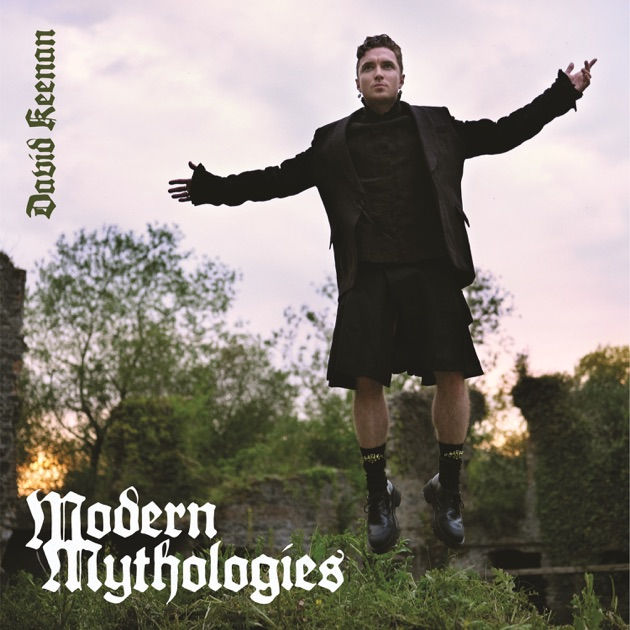
Modern Mythologies is out now


Comments